Food Supplier Indian Cuisine: RTE & RTC Solutions for Simplifying Indian Cooking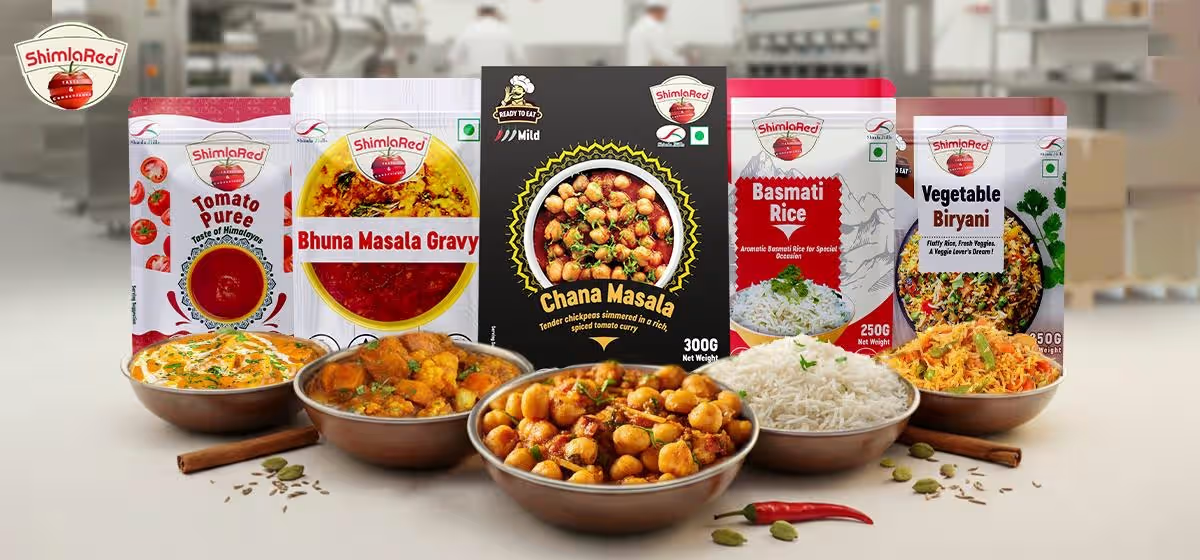
Indian cuisine is known for its diversity, regional variations, and complex preparation techniques. Traditional cooking methods often require extended preparation time, precise ingredient handling, and skilled execution. While these practices remain important, modern lifestyles and commercial food operations increasingly demand efficiency, consistency, and scalability.
In response to these requirements, ShimlaRed operates as a food supplier offering Ready-to-Eat (RTE) and Ready-to-Cook (RTC) food solutions. These products are designed to support standardized cooking processes while retaining traditional flavour profiles. The focus remains on providing structured food formats for domestic and institutional consumption.
This approach supports both individual consumers and food service operators in managing time, resources, and quality in food preparation.
Changing Requirements in Modern Indian Cooking
Traditional Indian cooking involves multiple steps, including ingredient selection, grinding of spices, preparation of base gravies, and slow cooking. While these methods contribute to flavour development, they may not always be practical in time-sensitive environments.
Urban households, working professionals, students, and institutional kitchens often face limitations related to time, space, and manpower. Commercial establishments such as restaurants, cloud kitchens, and catering services also require predictable production schedules and consistent output.
RTE and RTC products address these challenges by offering partially or fully prepared food components. These formats reduce manual preparation while allowing standardized cooking practices across different locations and operators.
Ready-to-Eat Meal Formats
Ready-to-Eat meals are fully cooked and packaged food products designed for direct consumption after reheating. These meals require minimal handling and preparation.
Typically, RTE meals are packaged in retort-compatible pouches or containers. Consumers can heat the product using microwave ovens, boiling water, or conventional heating methods. The preparation process generally involves opening the package, heating the contents, and serving.
RTE meals are commonly used in the following environments:
- Residential households
- Hostels and dormitories
- Office pantries
- Travel and outdoor settings
- Institutional kitchens
These products help reduce cooking time and simplify meal management, particularly in locations where cooking facilities may be limited.
RTE formats also support portion control and inventory management for food service providers.
Ready-to-Cook Product Applications
Ready-to-Cook products are semi-prepared food components that require additional cooking, seasoning, or finishing before consumption. These products provide greater flexibility than fully cooked meals.
RTC formats often include:
- Base gravies
- Curry bases
- Sauce concentrates
- Semi-cooked lentils
- Pre-seasoned vegetable mixes
These components allow chefs and kitchen staff to customize recipes according to regional preferences, menu requirements, and customer expectations.
RTC products are widely used in:
- Restaurants
- Cloud kitchens
- Catering operations
- Central kitchens
- Institutional food services
By reducing initial preparation stages, RTC products help streamline workflows and improve operational efficiency.
Standardization and Consistency in Food Operations
One of the main challenges in large-scale food preparation is maintaining consistency across batches and locations. Variations in raw materials, cooking methods, and staff skills can affect product quality.
RTE and RTC solutions are developed using standardized formulations and controlled production processes. This helps ensure uniform taste, texture, and appearance.
Standardization supports:
- Brand consistency
- Predictable portion sizes
- Reduced food wastage
- Simplified staff training
- Stable menu planning
For multi-location food businesses, standardized products play an important role in maintaining uniform customer experience.
Food Manufacturing and Processing Systems
Food production involves several stages, including sourcing, cleaning, processing, cooking, packaging, and storage. Each stage is governed by operational guidelines and quality controls.
Retort processing technology is used to thermally treat packaged food products under controlled conditions. This method helps in extending shelf life while maintaining product safety and stability.
Key features of retort processing include:
- High-temperature sterilization
- Sealed packaging during processing
- Reduction of microbial activity
- Preservation of product texture
This process enables ambient storage without refrigeration, which supports long-distance transportation and bulk distribution.
Quality Control and Food Safety Practices
Food manufacturing requires adherence to regulatory and safety standards. Quality control systems are implemented at multiple stages of production.
These systems typically include:
- Raw material inspection
- Supplier verification
- Batch testing
- Hygiene monitoring
- Equipment sanitation
- Documentation and traceability
Production facilities operate under food safety frameworks that emphasize contamination prevention, risk assessment, and corrective actions.
Routine audits and internal inspections help ensure compliance with national and international food regulations.
Ingredient Sourcing and Traceability
Ingredient quality directly influences final product characteristics. Sourcing practices are structured to ensure consistency and reliability.
Traceability systems allow tracking of raw materials from suppliers to finished goods. This supports quality verification, recall management, and regulatory compliance.
Key elements of traceability include:
- Supplier records
- Batch identification
- Processing logs
- Storage documentation
- Distribution records
These systems enhance transparency and accountability within the supply chain.
Industrial Packaging and Storage Systems
Packaging plays a central role in product preservation, safety, and logistics. Industrial food packaging must protect products from contamination, physical damage, and environmental exposure.
Retort-compatible packaging materials are designed to withstand high temperatures and pressure during processing. These materials also provide barrier protection against moisture, oxygen, and light.
Common packaging formats include:
- Flexible pouches
- Laminated sachets
- Multi-layer containers
- Bulk packaging units
Packaging systems are designed to support stacking, handling, and long-term storage.